Humility
The core of Step 7 is humility. This prayer is an admission that we cannot remove our own "shortcomings" through willpower alone.
My Creator,
I am now willing that You should have all of me,
good and bad.
I pray that You now remove from me
every single defect of character
which stands in the way of my usefulness
to You and to my fellows.
Grant me strength,
as I go out from here,
to do Your bidding.
Amen.
The Seventh Step Prayer is not a free-standing devotional but a passage lifted directly from Alcoholics Anonymous, the movement's foundational text. Its history is short, well documented, and traceable to a single author and a single page.
The prayer appears in Chapter 6, "Into Action," of Alcoholics Anonymous — the "Big Book" — on page 76 of the current fourth edition. In the book it is introduced with the words "When ready, we say something like this," and the paragraph closes "We have then completed Step Seven" — showing that its author offered it as a model, not fixed liturgy, per AA's official chapter text. Unlike the Serenity or St. Francis prayers, it originates inside AA's own literature.
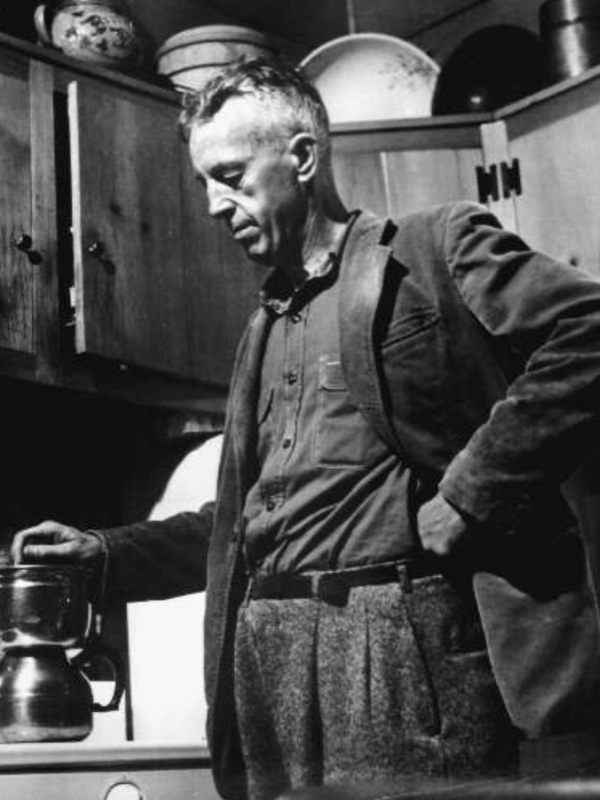
Alcoholics Anonymous was principally written by co-founder Bill Wilson (William G. Wilson, 1895–1971), who drafted the first-164-page text apart from the chapter "To Employers," an AA general-service archive notes. The Seventh Step passage was not a later addition: it already appears, in near-identical wording, in the 1938 pre-publication "multilith" manuscript circulated before the book's April 10, 1939 publication, reading, "When you are ready, say something like this: 'My Creator, I am now willing that you should have all of me…'" The chief revision before print was tone: reviewers — including a New Jersey psychiatrist Bill W. called "Dr. Howard," along with Dr. William Silkworth and Dr. Harry Tiebout — urged softening the manuscript's "you must" commands toward the collective "we," as documented in AA historian Arthur S.'s "Big Book History and Myths".
The prayer's wording reflects deliberate choices to keep the text open to all beliefs. As the book was finalized, AA's first outspoken atheist, Jim Burwell, and agnostic member Hank Parkhurst pressed for less overtly Christian language — it was they who "bridled at Bill's original 'God'-centered Step Three and pestered the group into the all-inclusive revision, 'God as we understood Him,'" reports The Fix. Bill W. recalled the wording compromises in Alcoholics Anonymous Comes of Age: "in Steps Three and Eleven we inserted the words 'God as we understood Him'" and "from Step Seven we deleted the words 'on our knees.'" AA’s General Service Office reproduces the passage in its Fall 2003 Box 4-5-9 newsletter, which cites the book at page 167. The prayer's own opening — "My Creator," rather than a denominational name — fits that same non-sectarian intent.
Researched and written by the SoberHub team · Last reviewed
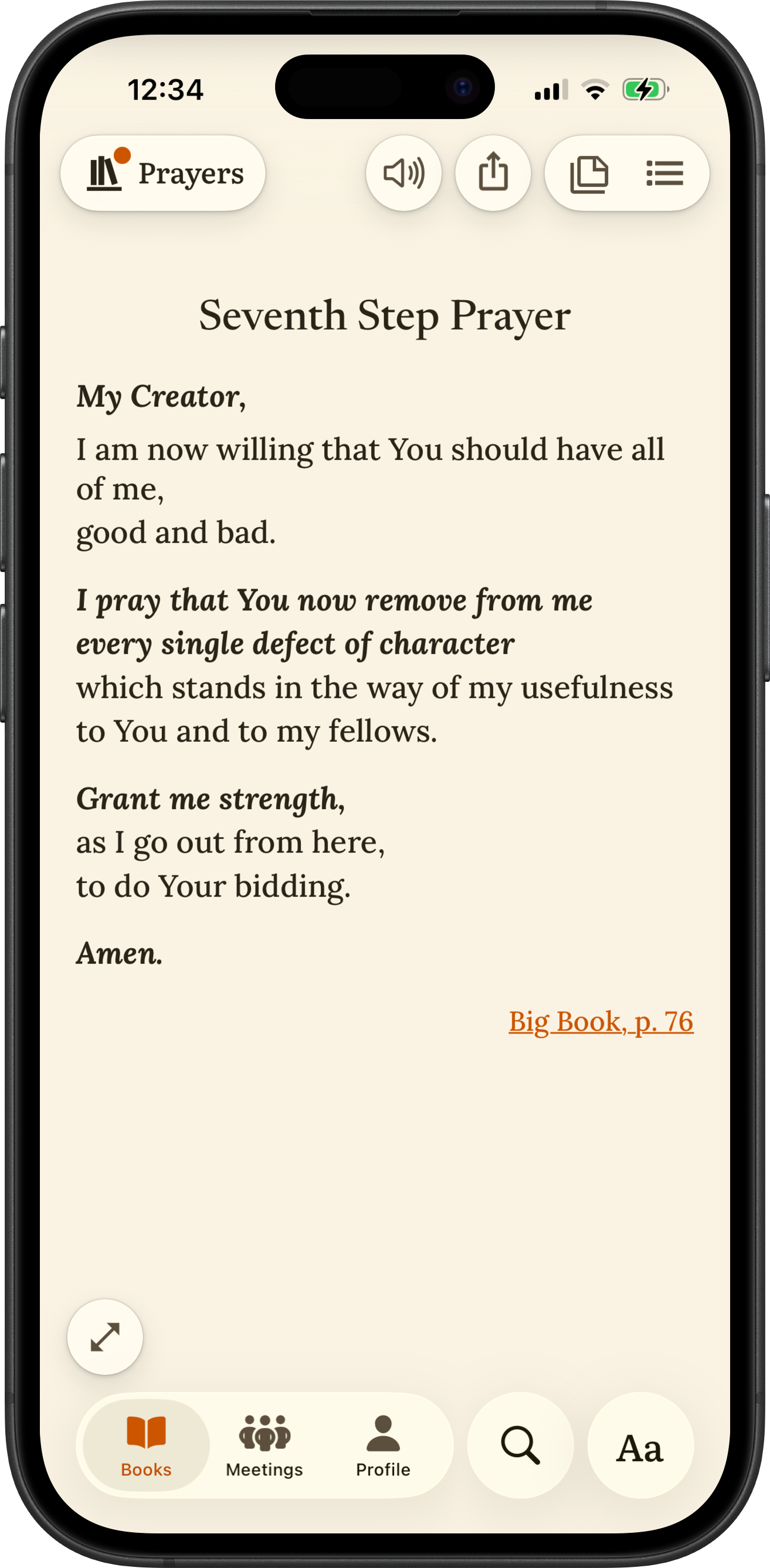
The journey doesn't end at Step 7. Use the Big Book and SoberHub to track your daily inventory, connect with your community, and keep all your recovery prayers in one place.


Free, no-ads on the SoberHub App.
About this prayer
After identifying specific character defects in Step 4 and sharing them in Step 5, the Seventh Step Prayer is the formal act of asking a Higher Power to remove those obstacles.
The core of Step 7 is humility. This prayer is an admission that we cannot remove our own "shortcomings" through willpower alone.
The opening line, "I am now willing that You should have all of me, good and bad," represents a total surrender of the ego.
Unlike prayers that ask for personal gain, the Seventh Step Prayer asks for the removal of defects so we can be more useful to God and to others.